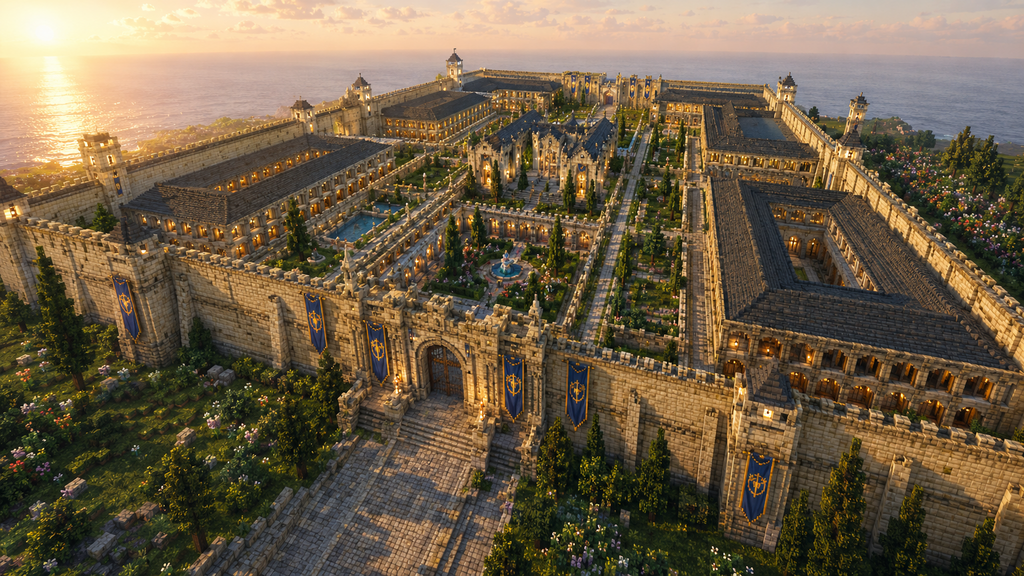
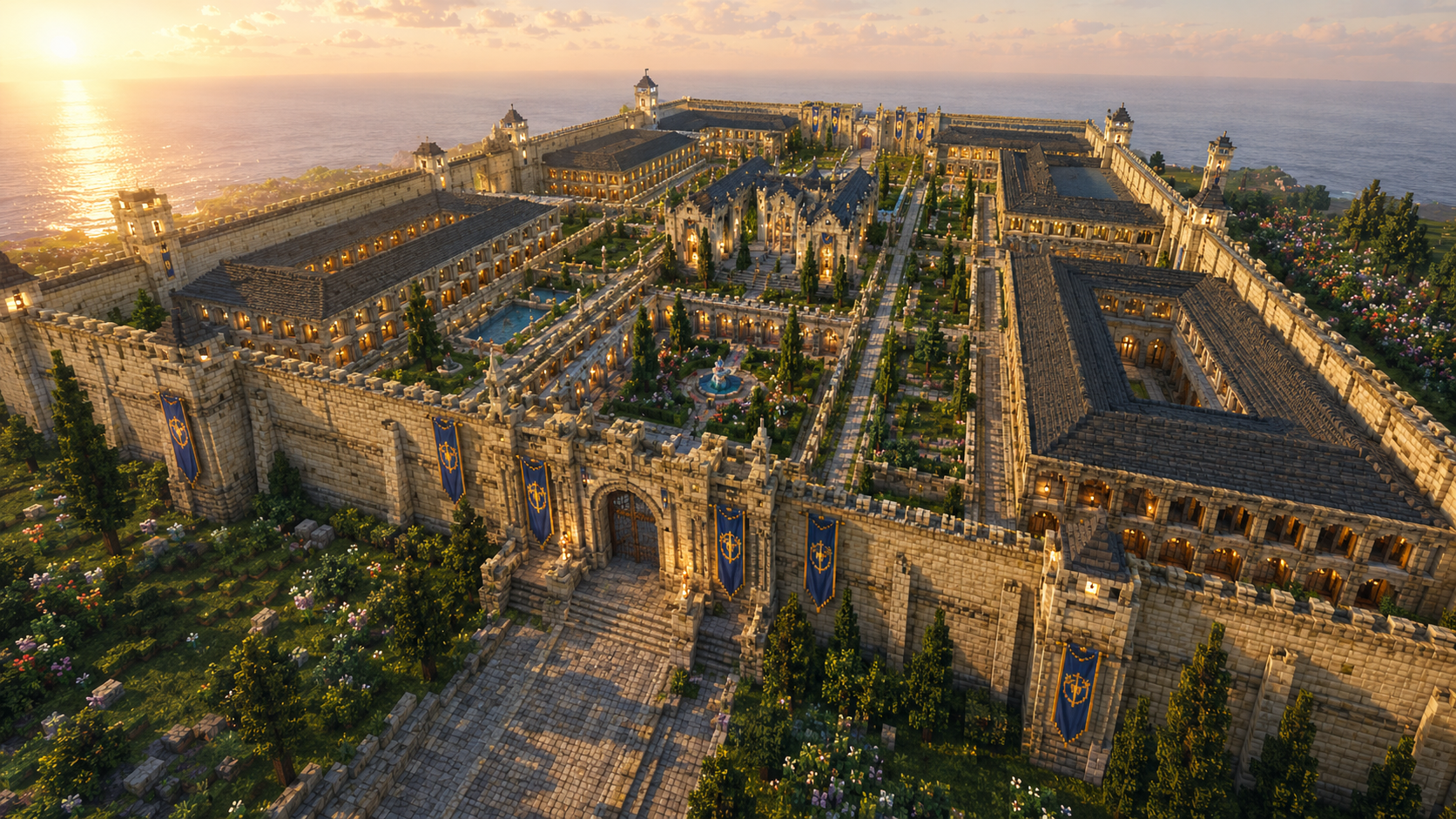
In the elder reckonings of Britannia, before the towers of men had learned to cast long shadows, there was a land beyond the common maps, a broken province of dim stars and violet dusk. It was called Malas, and in Malas there stood a city named Umbra, where the lamps burned with a cold blue flame and the dead were spoken of not as gone, but as merely distant.
There, so the oldest chronicles say, appeared Vaelthar.
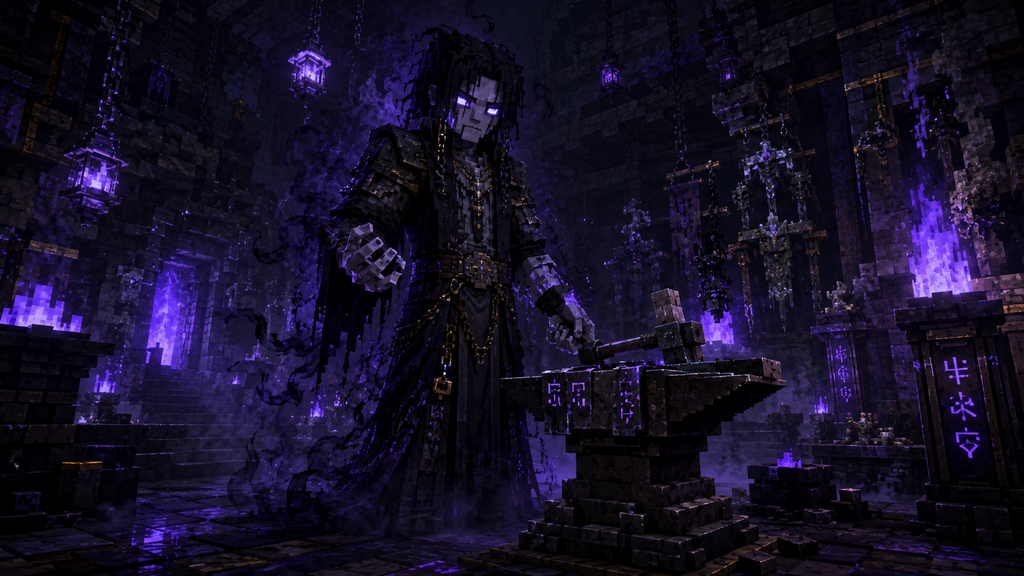
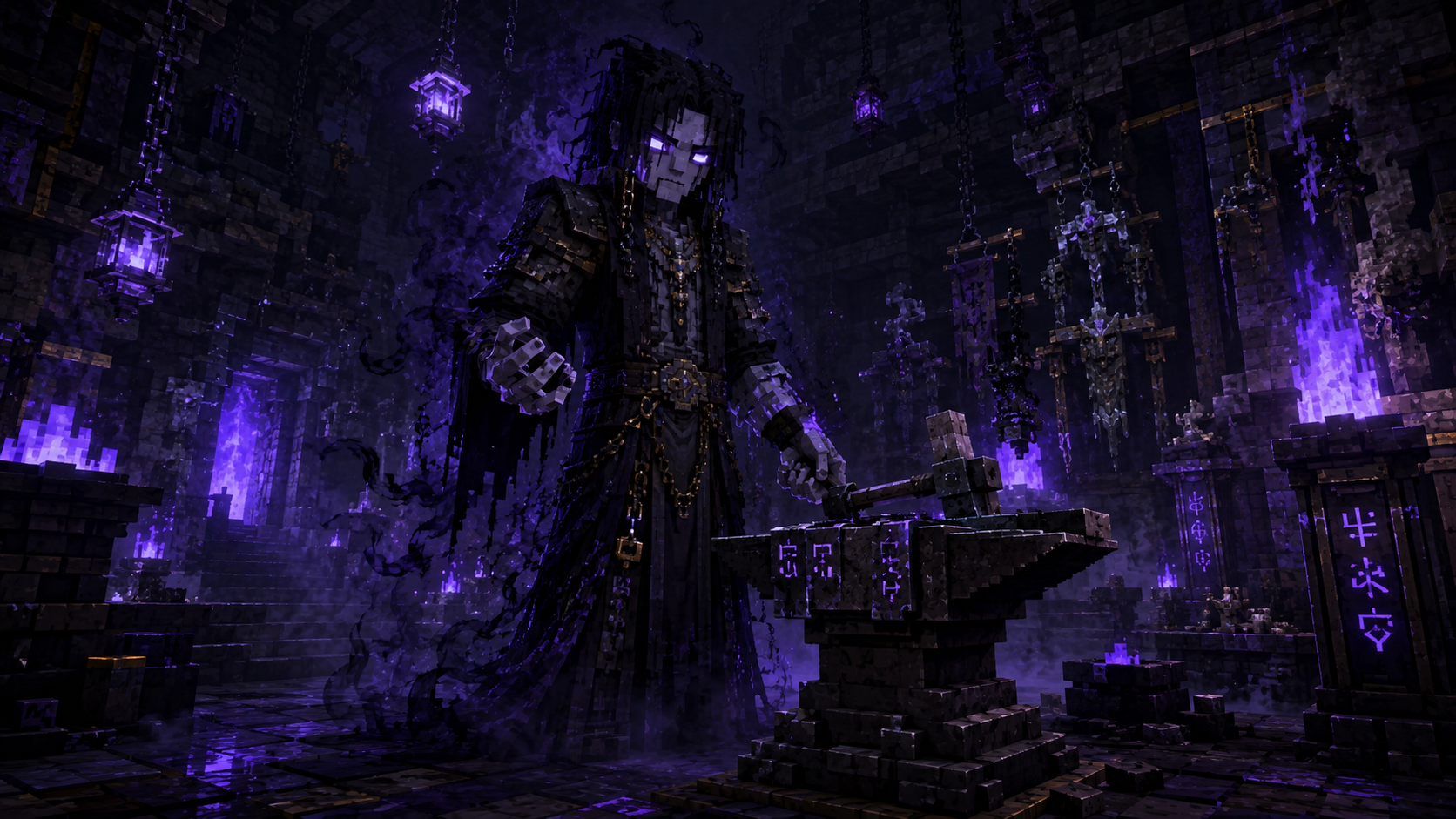
Vaelthar the smith
No mother bore him. No cradle held him. No child’s laughter ever passed his lips. He came first as a stain upon polished stone, then as a whisper beneath the forges, then as a figure standing where no door had opened. Those who saw him in those first days could not agree whether he was young or old, man or shadow, beggar or lord. He seemed unfinished, as though the world had begun to make a person and then recoiled from the work.
Yet Vaelthar desired the world more fiercely than any living creature.
He envied the weight of flesh, the pulse of blood, the warmth of breath in winter air. He watched smiths strike iron and hated the sparks because they existed more brightly than he did. He watched children bruise their knees and weep, and he hated them for possessing pain. He watched old men die and envied even death, for death required first the dignity of having lived.
So Vaelthar went down beneath Umbra, into halls where no citizen walked, and there listened to the old dark that pooled beneath the city. From it he learned the art of making. Not the honest craft of hammer and patience alone, but the colder craft by which shape is forced upon essence. He learned how memory could be bound in silver, how grief could harden like glass, how longing might be folded into gold until it shone with a light of its own.
In time he became a smith of dreadful brilliance.
He made crowns that caused kings to dream of buried thrones. He made mirrors that showed not the face, but the hunger behind it. He made knives that never rusted, though none could say they were sharp. Yet for all his genius, Vaelthar possessed little strength. He could not conquer a village, nor lead an army, nor command the loyalty of even a frightened servant. He was a poor strategist, impatient in counsel, contemptuous of allies, and baffled by courage. A child might have outwitted him in the open field.
But give him a relic, and he could trouble the sleep of kingdoms.
Far from Malas, in the living lands of Britannia, there walked another seeker of ancient things. His name was Zorathiel, though in those days few knew whether to call him wizard, historian, thief, or saint.
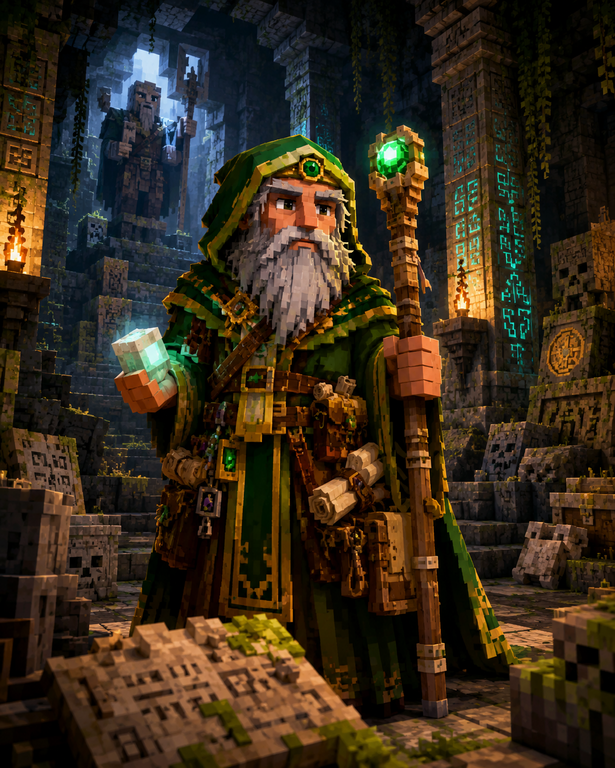
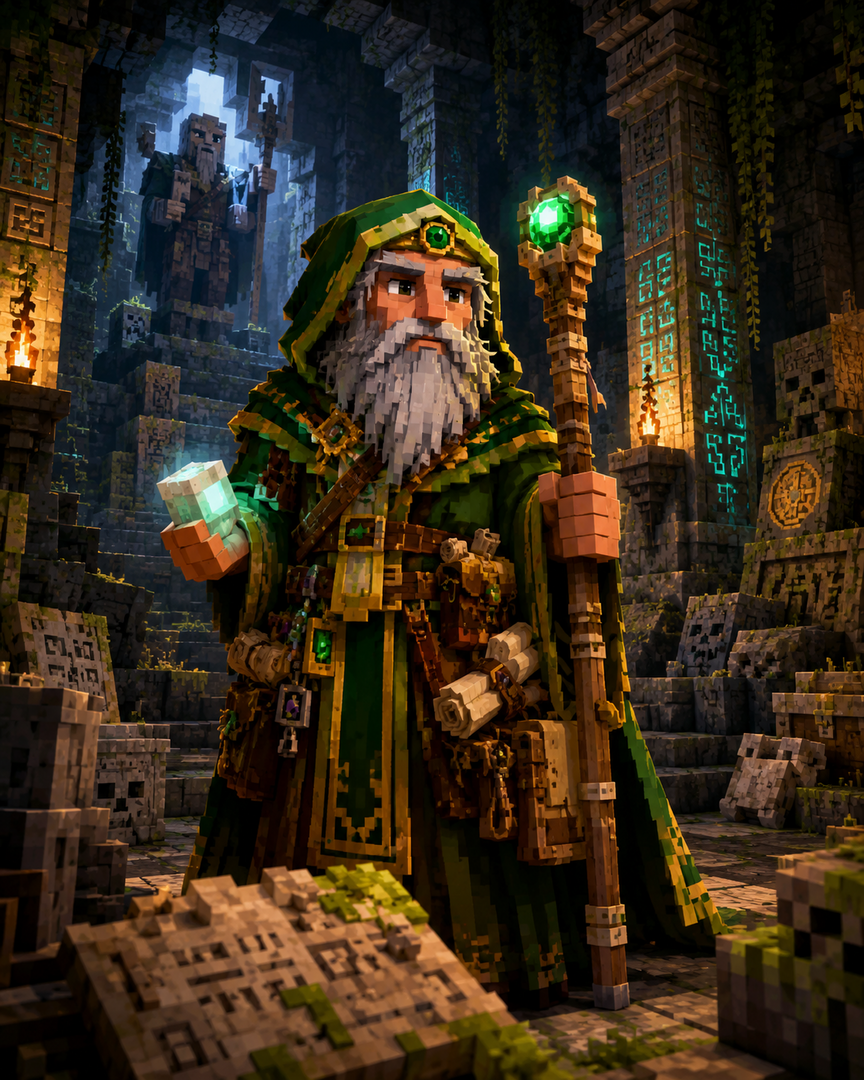
Zorathiel the wizard
He was tall and silver-eyed, with a mantle the color of moonlit ash and a staff carved from the pale wood of a tree that no longer grew. Yet beneath that grave splendor was a restlessness that made scholars distrust him. He preferred ruins to councils, broken tablets to polished speeches, and the company of maps to the company of nobles. He had climbed through serpent-haunted wells, crossed flooded crypts with a rope about his waist, and once stole a jeweled idol from a collapsing shrine only to return it three nights later with a correction to the inscription.
Zorathiel was not driven by wealth, nor by glory, nor even by power. He was haunted by antiquity. He believed Britannia had buried too much of itself. Beneath its virtues, beneath its castles and laws, beneath every road men thought they had made, there lay another story, older and stranger. He sought that story as another man might seek a lost child.
His search led him at last to Malas.
In the archives of the Lycaeum he found mention of Umbra written in a language that had not been spoken by living mouths for a thousand years. In a merchant’s grave he found a black coin stamped with a hammer and an eye. In a cavern below the northern mountains he found a door that opened only when he spoke not a word of command, but a word of regret.
Through that door he descended.
The path beneath Malas did not welcome him. Stone stairs turned back on themselves. Statues shifted when unseen. Pools of still water reflected rooms he had not yet entered. Many times Zorathiel might have turned away, and many times wisdom told him that he should. But his heart, noble though it was, had its own peril. He loved the hidden past so deeply that even warning seemed to him a form of invitation.
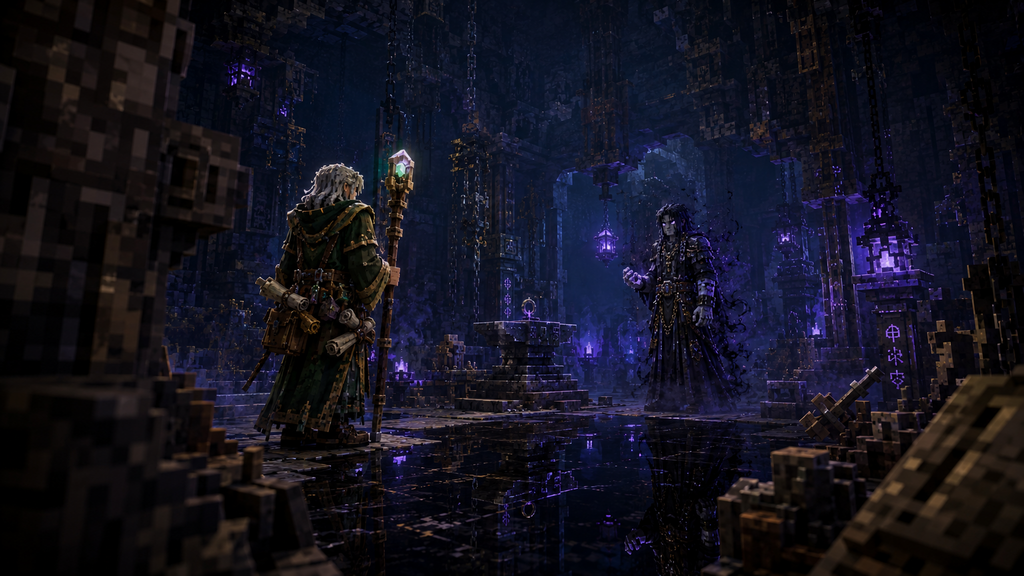
At the lowest chamber, he found Vaelthar.
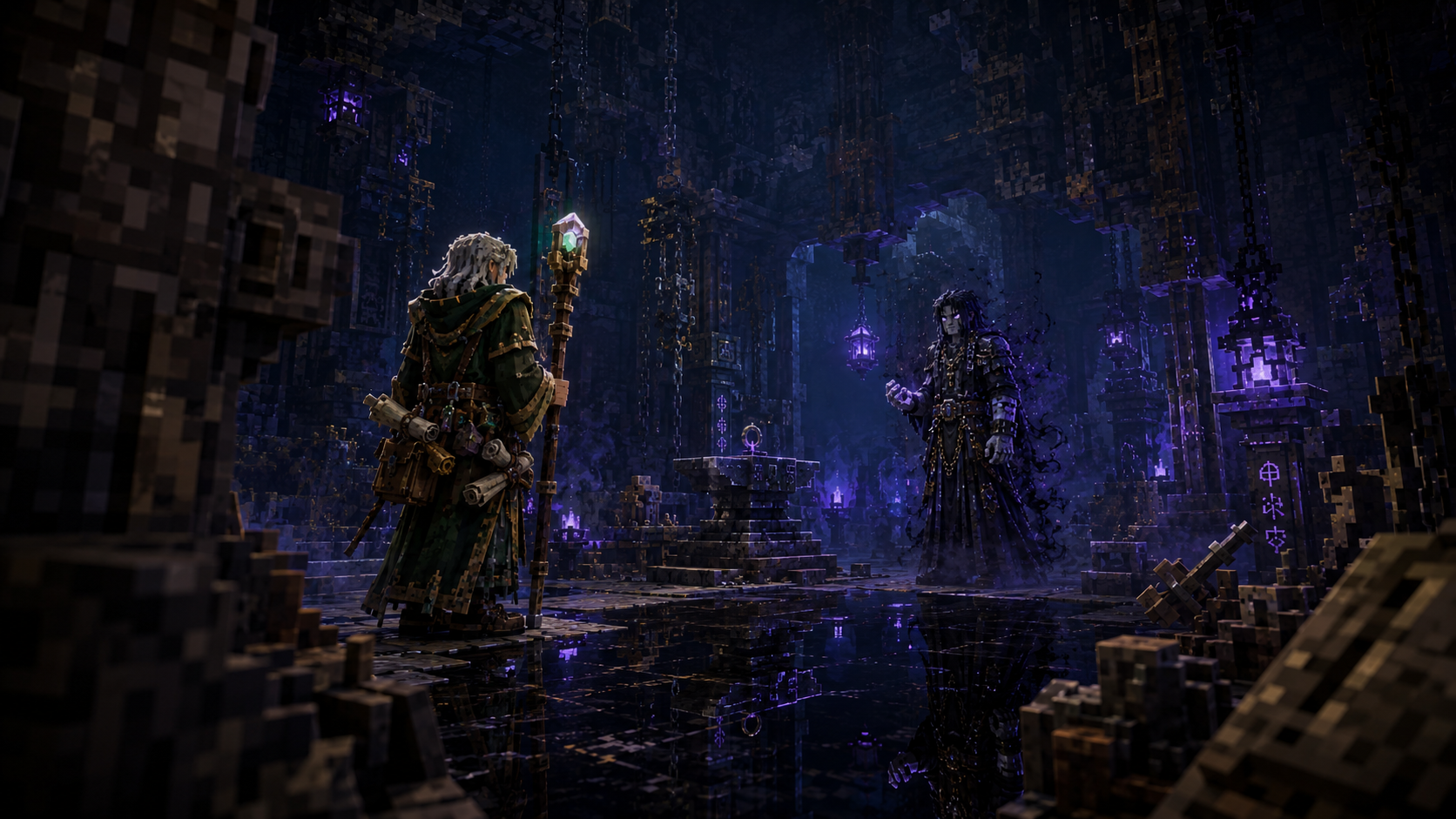
The lowest chamber
The smith stood before an unlit forge, thin and dark, robed in a garment that seemed woven from smoke and old velvet. Around him hung relics of his making, each suspended by chains so fine they were nearly invisible. Zorathiel knew at once that he had found no common necromancer, no dungeon lord swollen with crude ambition. This was something rarer and more dangerous: a maker of meanings.
Vaelthar turned.
No spell was cast. No blade was drawn. No challenge rang across the chamber.
For a long moment there was only silence.
Zorathiel looked upon Vaelthar and saw a being who had never belonged to the world, yet longed to possess it utterly. Vaelthar looked upon Zorathiel and saw a being who belonged to the world so fully that he could afford to chase the dead. They stood like reflections in a black pond, each recognizing in the other a hunger shaped differently.
“You collect the bones of ages,” said Vaelthar at last.
“I listen to them,” said Zorathiel.
“And what have they told you?”
“That every relic is a warning mistaken for a treasure.”
Vaelthar smiled then, and the smile was almost human.
“Then you are wiser than most who dig.”
Zorathiel should have left. Later he would know this. In dreams, across many years, he would return to that chamber and command his younger self to flee. But in that hour curiosity held him like a hand around the throat. He spoke with Vaelthar until the forge stones cooled and the lamps burned low. They spoke of ancient kings, of lost cities, of the difference between memory and life. Vaelthar asked many questions about flesh, blood, inheritance, and death. Zorathiel answered too many of them.
Before he departed, Zorathiel saw a circle of pale metal lying upon the anvil.
It was not yet a ring. Not truly. Only the beginning of a shape.
“What is that?” he asked.
Vaelthar covered it with his hand.
“A doorway,” said the smith.
Zorathiel carried that word with him when he returned to Britannia. For years he tried to forget it, burying himself in safer ruins and brighter halls. He told no one of the smith beneath Umbra. Perhaps pride restrained him. Perhaps fear. Perhaps, in some chamber of his own heart, he wished to see what Vaelthar would make.
Vaelthar did make it.
He labored in secret beneath Umbra, no longer content with crowns, mirrors, or knives. He did not want a relic that influenced the living. He wanted a relic that would make him living. More than living. He wanted to become undeniable. To pass from shadow into substance, from spirit into law, from hunger into flesh.
But no ordinary fire could complete such a work.
So Vaelthar opened the deep channels beneath Malas and called to every life within reach. Not only bodies, but breaths. Not only breaths, but names. The people of Umbra woke in the night and felt themselves being remembered by something that hated them. Lamps guttered. Windows blackened. Voices vanished mid-prayer. In the streets, hands reached for hands and found them cold with absence.
By dawn, Umbra was silent.
The city had not burned. Its towers still stood. Its gates remained open. Cups sat on tables. Looms held half-finished cloth. Cradles rocked without wind. But the people were gone, drawn into the final relic, their spirits folded into its inner dark, neither freed nor ended. Malas itself became a wasteland of listening stones and hollow air.
On the anvil lay a ring.
Vaelthar reached for it, laughing, believing at last that he would wear the world as flesh.
But the relic was truer than its maker.
It consumed him too.
His body, if he had ever possessed one, fell away. His name bent inward. His will, his envy, his craft, and all the stolen souls of Umbra were bound within the circle he had made. Vaelthar became the ring, and the ring became a hunger with no hand to lift it.
There it remained beneath dead Malas, perfect and useless, filled with power and surrounded by silence.
For there was no one left to find it.
And far away, in the Lycaeum, Zorathiel woke from sleep with tears upon his face, though he did not yet know why.