They say the Deep Forest knows your weight before your foot ever touches down. I believe it. On the morning I first limped into Yew proper, sap-sour sweat in my eyes and the taste of bad luck on my tongue, I felt the trees lean in and judge me. Not with malice. With measure. The oaks and yews of these woods count a person like a careful banker counts coins—feeling for the light fakes, the hollow rings, the chips on an edge you hope no one sees.
Empath Abbey
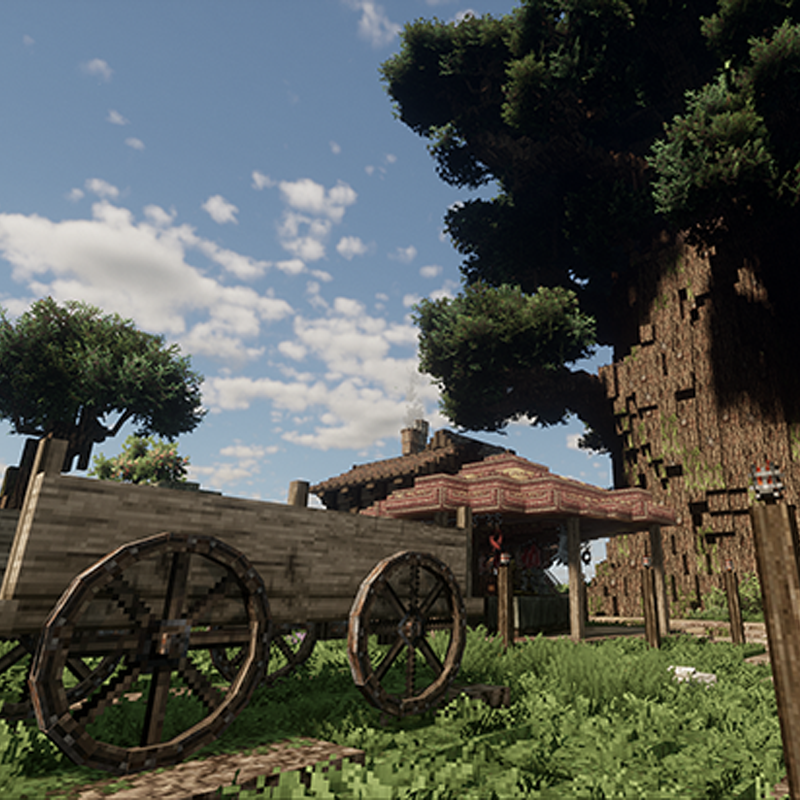
I was a nothing—a stringy-armed runner with a bent bow and a pouch of dull-headed arrows that rattled like teeth. A “ranger,” I told myself, because everyone needs a title to keep the cold off their pride. But I was more properly a messenger who had run afoul of an orc raiding band near the western edge of the Deep Forest, not far from a mill creek that smelled of wet chaff and pine tar. I’d made the mistake of stopping to help a farmer—Old Dren—get his cart unstuck from a root that rose like a knuckle from the path. We were nearly finished when the arrows came in. They thudded the wood and skittered on the stones, and by the time I’d thrown Dren out of the traces and into a ditch, the green-skins were on us.
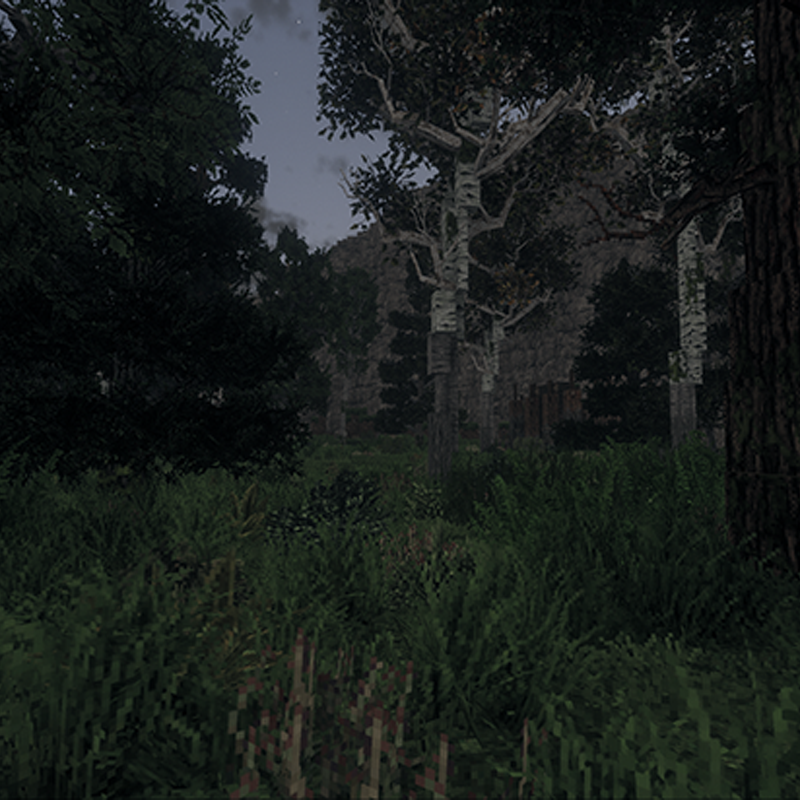
Orc Fort hidden in the forest
I don’t rightly remember how I escaped. I remember a howl, and a bowstring snapping, and a small miracle—my feet remembering a rabbit’s way while my head was still stalled like a stubborn mule. I remember the cart wheel catching an orc’s knee with a crack like splitting kindling. I remember looking back for Dren and seeing only an empty ditch and a dark stain on the path. Then the forest swallowed me, and I ran. I ran beneath branches that clawed my hair and snatched at my collar, I ran until I could no longer hear the orcs, until the voice in my lungs became a hammer, until the sky itself dimmed with the canopy and the smell of yew berries turned bitter in my mouth.
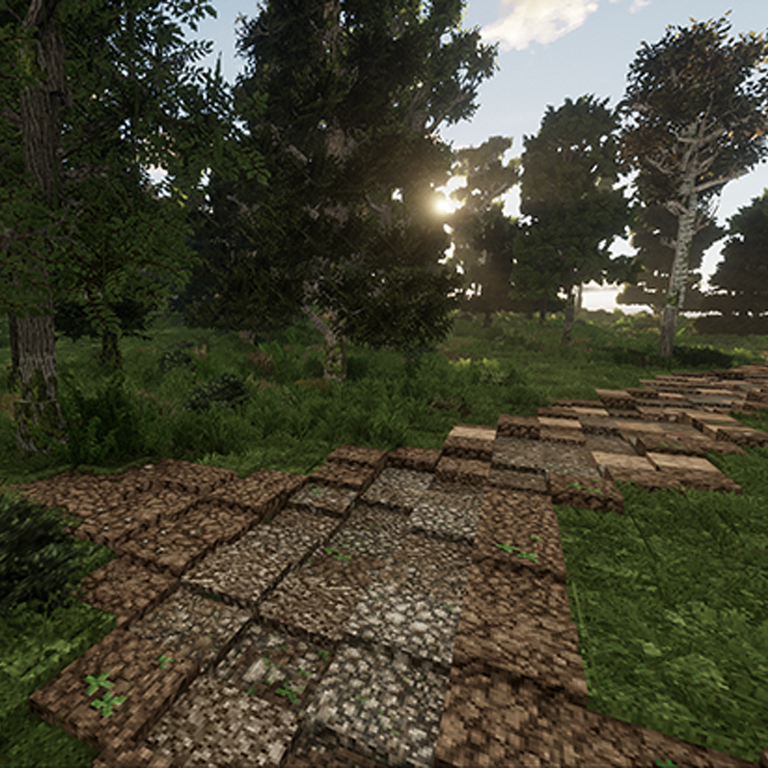
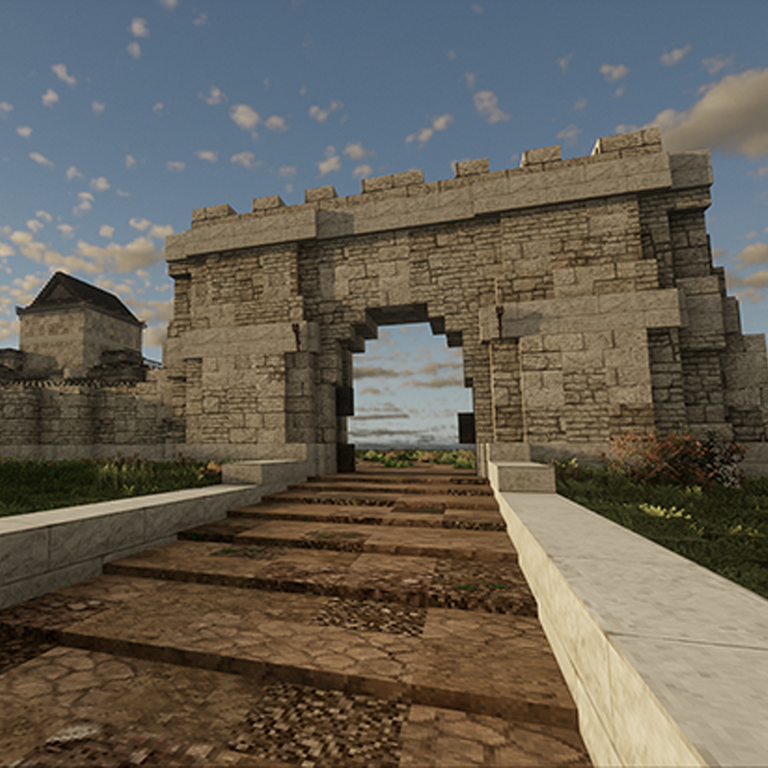
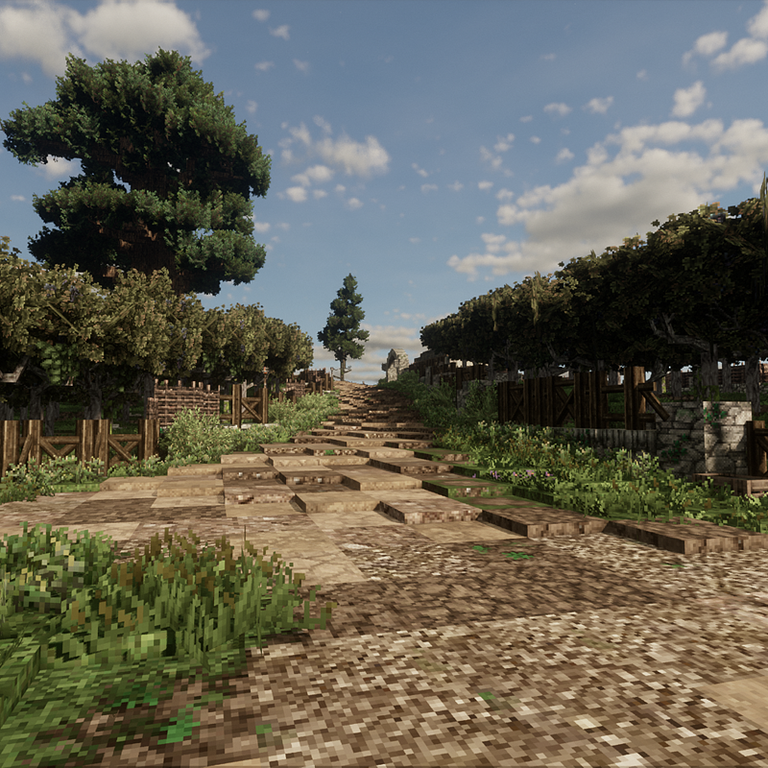
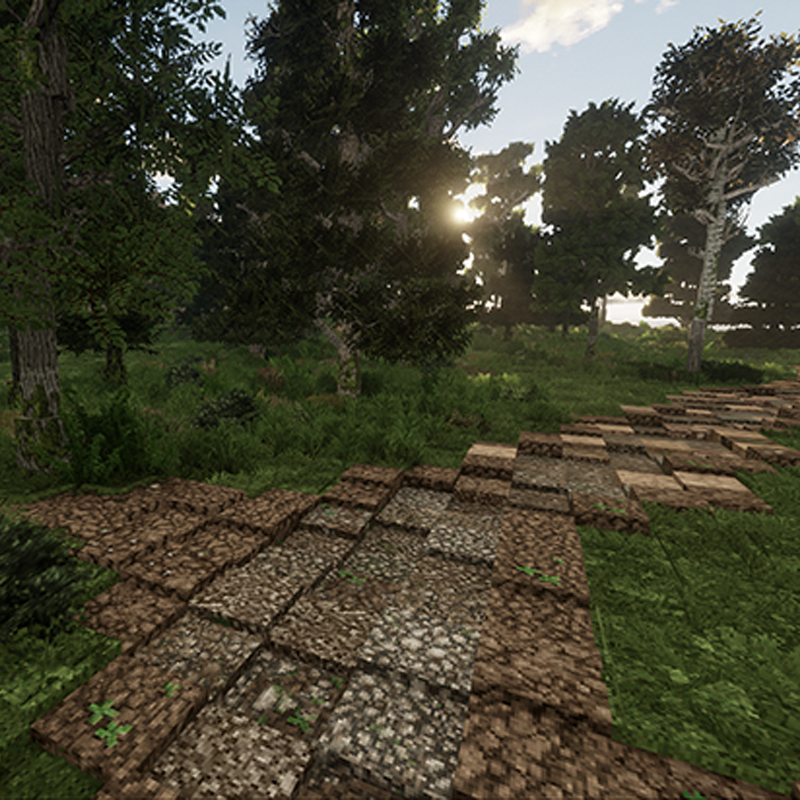
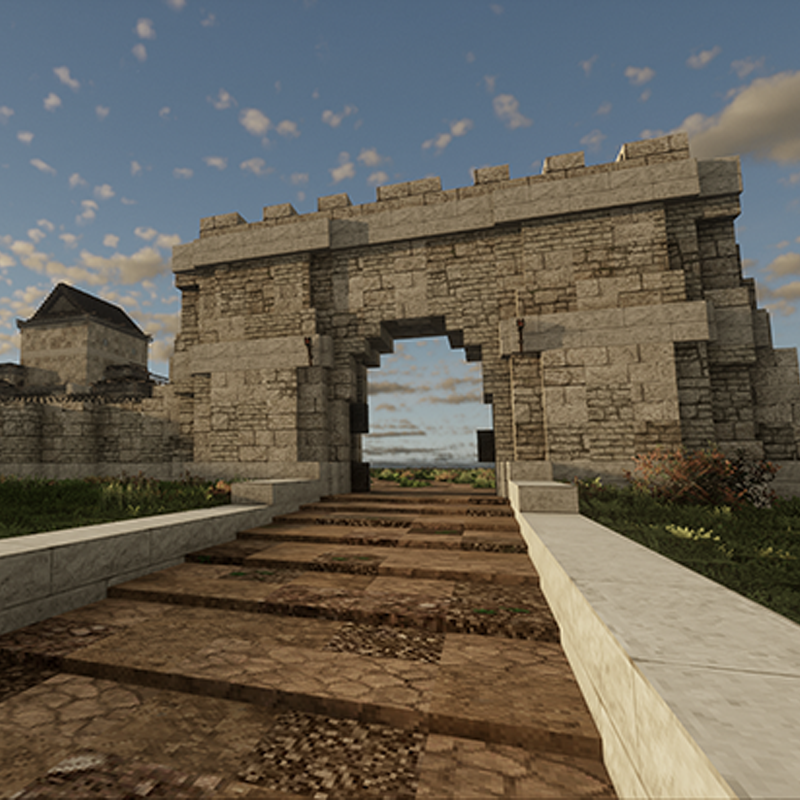
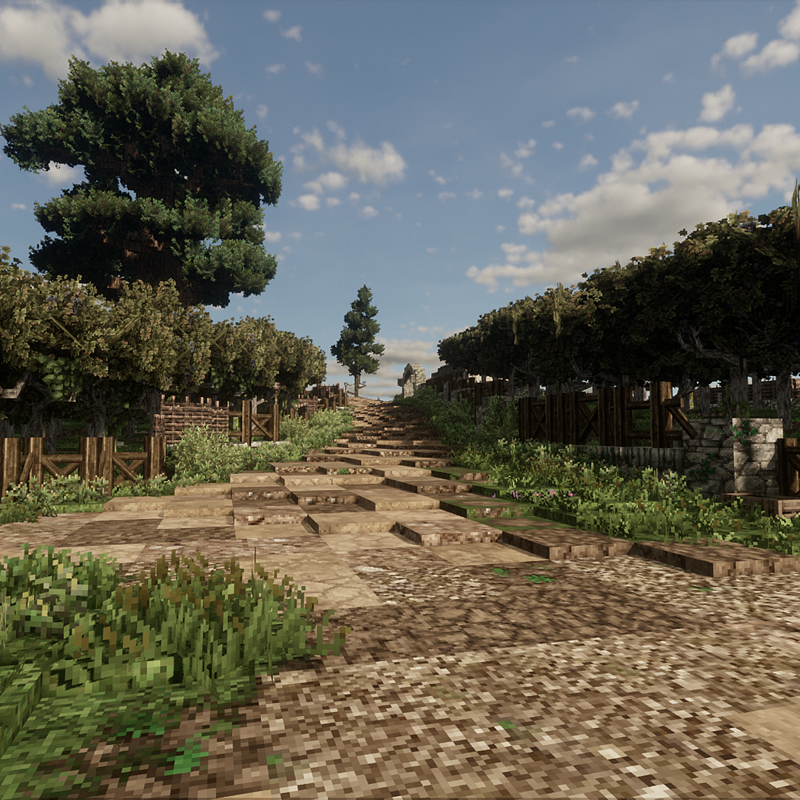
Crossroads to Yew
By the time I staggered out onto a wide, trodden track—the kind you get only where a city’s pulse beats steady—the sun was sinking gold across the Deep Forest. Ahead, through latticework shadows, lay Yew: not a city of walls and towers but a scatter of lives, homesteads strung on dirt roads like amber beads, smoke from cook fires rising in threads that got tangled in the treetops. To the east, on ground that felt firmer than the rest, I saw stone: Empath Abbey, stolid as a promise, catching the last light on its white flank. Bells tolled. Somewhere near the Abbey’s slope the wind bore the bright breath of wine, and for a heartbeat I imagined I might be no one at all—just a man with coin, stopping at Ye Olde Winery for a cup and a song before turning down bedding. Then my knees buckled, and the day remembered me.
“Ho there!” came a voice like a twig snapping.
Empath Abbey
Two figures emerged from a stand of young spruce. Robes the color of leaf mold. Staffs. Druids. The nearer one was wiry, with eyes like lantern glass. The farther stood tall and grave, hair braided back with sprigs of green that still smelled alive.
“Trouble,” I croaked, though the word barely found air.
“Of course,” said the lantern-eyed druid. “That’s our most common guest.” He tapped my chest with two fingers—not unkindly, not kindly either—and I felt something stir beneath the ache. “The Court of Truth is that way, for those who seek verdicts. The Abbey’s healing houses are nearer, for those who seek warmth before wisdom.” His mouth quirked. “You look like you need both.”
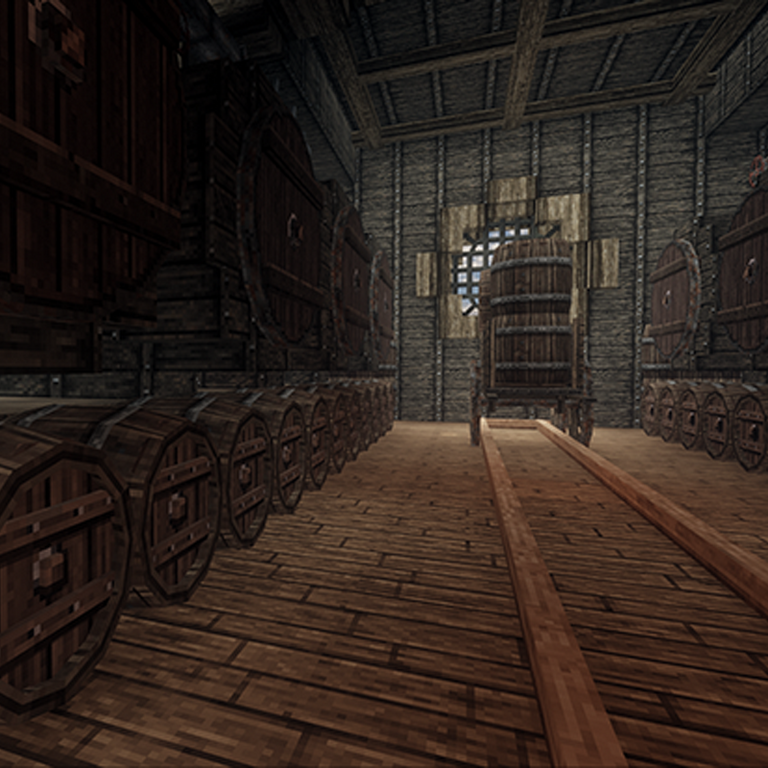
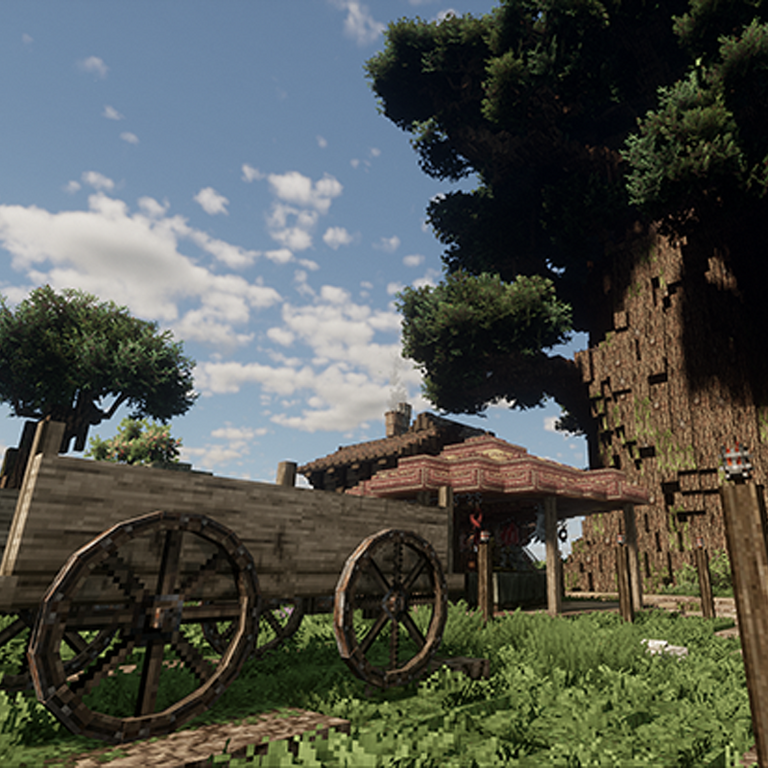
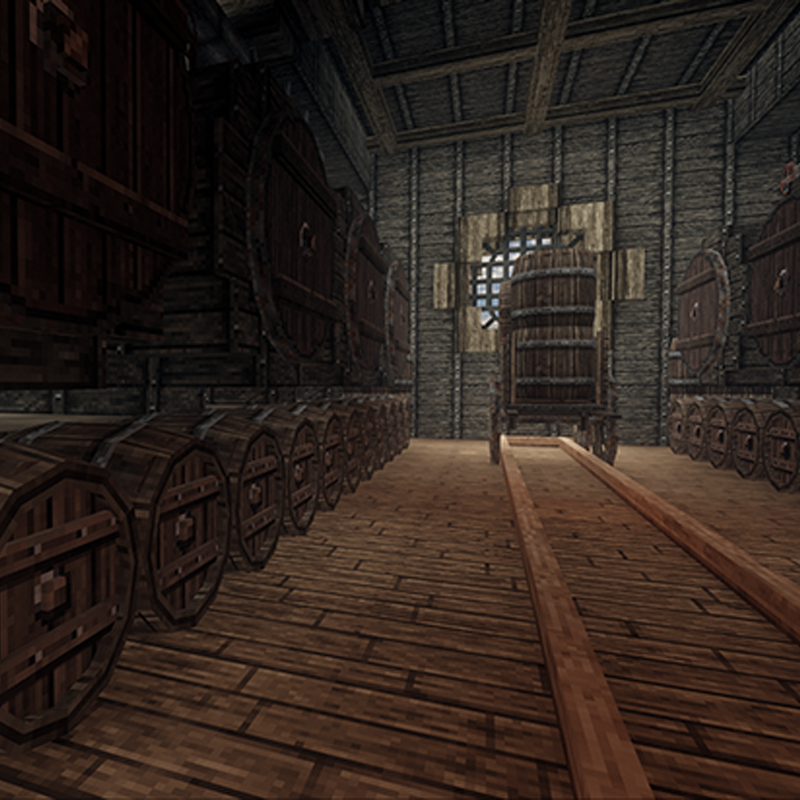
The winery of Empath Abbey
I tried to nod. The world tilted. The grave druid caught me by the arm and, with surprising gentleness, guided me along a side track that curved like a sentence toward Empath Abbey’s lower grounds. We passed a cart stacked with split oak and a pair of rangers in leather arguing about arrow spines. We passed a boy with straw in his hair and a loaf of bread bigger than his head, carrying it like a sacred relic to a door from which laughter spilled like light. We passed a woman with calves of iron pushing a barrow. She had the eyes of someone who had never yet been late for anything that mattered. Yew eyes, I would learn to call them—eyes that weighed, eyes that remembered, eyes that forgave without forgetting.
The healers took me in. Not Jaana herself, though her name hung in the rafters like a pennant. Everyone here knew her, or knew the idea of her: the way a story can stand a person in a room better than a body can. A woman named Melis tended me. Her hands were cool. She smelled of mint, linen soap, and a shadowy note beneath it—old wine cask wood, perhaps, or the Abbey’s stone itself breathing in twilight. She dabbed my brow, checked the ugly blossom swelling along my ribs where an orc haft had kissed bone, and asked the questions a healer asks: Who, what, where, why. The words came out of me like water finding a crack. When I finished, she nodded once.
“You’ll live,” she said. “It seems Justice isn’t finished with you.”
“Justice?” I was too tired to laugh. “I’ve no quarrel with the law.”
“That is not what Justice means, traveler,” she said. Then she gave me a draught that smelled of apple must and let sleep carry me cleanly away.
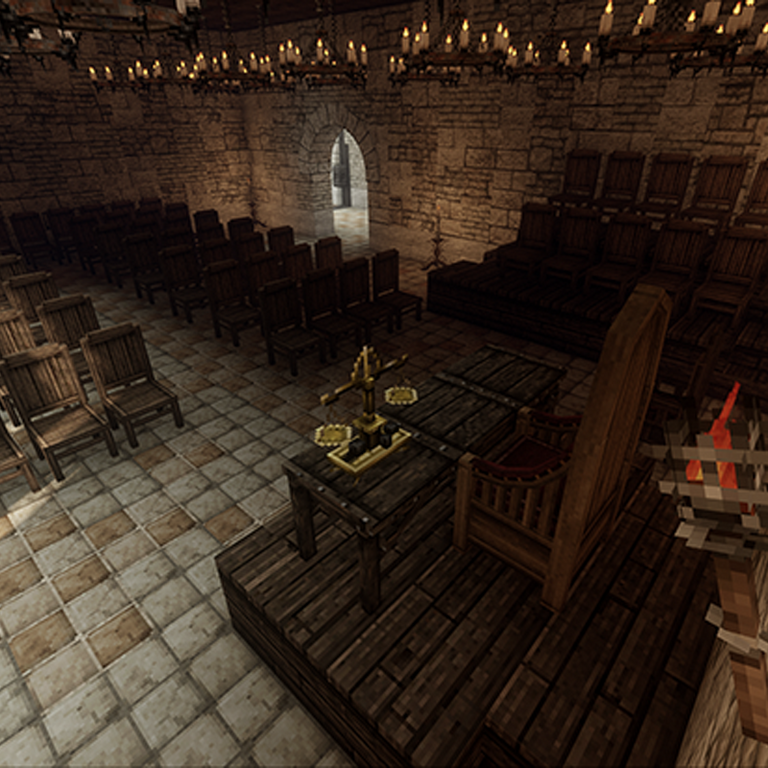
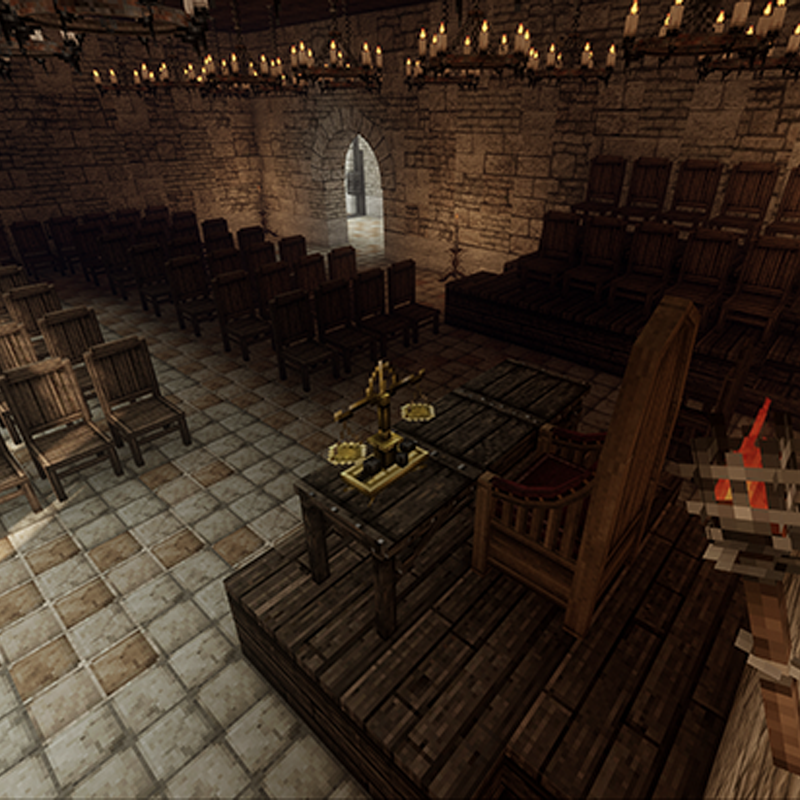
The court of truth
I woke to bells again—and to voices, sober and low, like a brook under ice. Through a half-open shutter I could see morning come thin and pale across the Abbey’s court, touching the shoulders of monks as they worked at their day’s beginnings. A tangle of vine shadows lay across my blanket. It looked like a net. For a moment I thought of old Dren tangled under that cart root, and my throat tightened.
“Rest,” said Melis from the doorway. “Then eat. Then speak.” She set a bowl of something steaming on a stool near my elbow. “If you have a tale that belongs before the Court, you must tell it while the day is fresh.”
Her meaning took root slowly. “The Court of Truth?” I said, and the name made the room feel colder.
She nodded. “There were orc arrows in your tunic. There are orc raids in the Deep Forest these days. There is also an old miller who did not come home last night.”
“Dren,” I breathed.
“Dren,” she agreed. “And his son is already at the Court, and the rangers are out, and the druids are listening to the woods. Justice here is not punishment; it is a ledger. If you are an entry, you must be counted.”
“Count me,” I said softly. “But don’t expect the sum to please you.”
I ate. I regretted how good it felt to eat. I cleaned my hands, set my hair to some semblance of order, and found my feet. Melis gave me a walking stick. “You may keep it,” she said, eyes kind but not soft. “It’s an Abbey stick, for balance.”
The stone of justice
Outside, the light had grown into the day. The Abbey’s stone glowed like bread just pulled from an oven. Monks moved in brown currents between doorways, and beyond the Abbey walls the Deep Forest hunched close as a cat on a hearth. A pair of men with saws were arguing amiably over a knot in a timber, and the wind bore the faintest aroma of crushed grapes, sweet and astringent by turns, from the winery yonder. Some part of me wanted to walk to that scent, down into the cool belly of Ye Olde Winery, to let wine lay a balm across my bruised spirit. But the Abbey stick felt warm in my palm, and my steps turned toward the Court.
The road to the Court of Truth is not grand. Yew doesn’t do grand. It does steady. I passed the Counselors Guildhouse, a long building with the air of a sentence that is fair even when it is hard. I passed a bowyer’s shop whose sign—Great Oak Bowyer—was carved with such clean lines that I could feel the draw in my shoulders just looking at it. A boy darted past with fletchings in his fist like a sheaf of green wheat. Two burly men were hauling sacks into a tannery whose yard looked like a dockside muddied by tides—dull work, essential work, Yew work. And then the Court rose ahead of me, all reinforced stone and severe angles, a smaller child of Castle Britannia but with its own history, its own heartbeat.
A crowd had gathered outside. Yew crowds are quiet things. Not cowed; considered. Faces I did not know turned toward me, ticked over me, filed me, weighed whether I belonged on the steps of that building and decided—on balance—that I did. A ranger I’d glimpsed by the Abbey nodded to my stick. “You walk straight, stranger. That’s a good omen.” A woman in a baker’s apron gave me a square of bread so fresh it scalded my fingers. “Eat where you must today,” she said. “Don’t faint under a judge’s eye. They call that confession by loaf.”
I swallowed hard. “Thank you.”
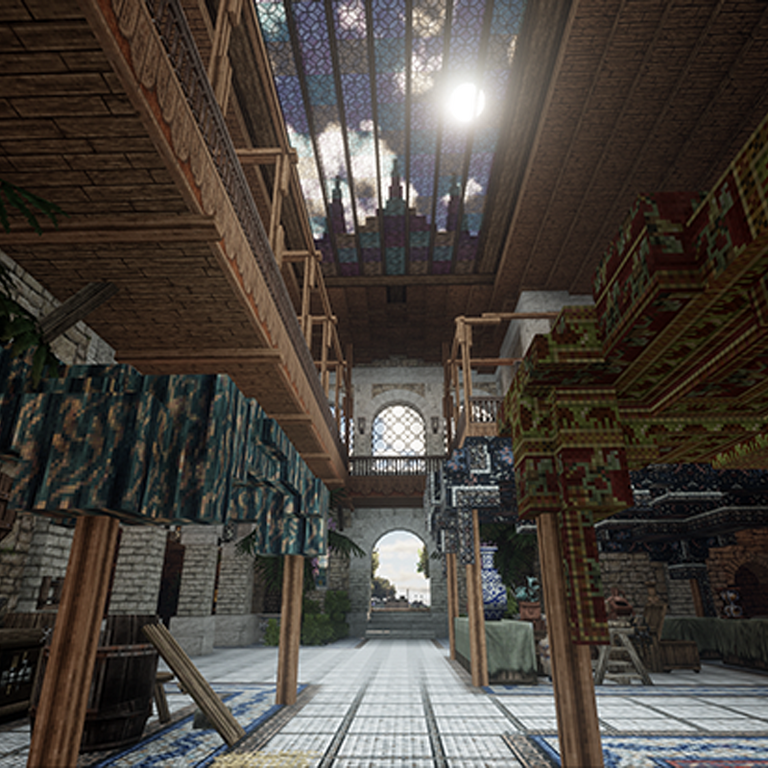
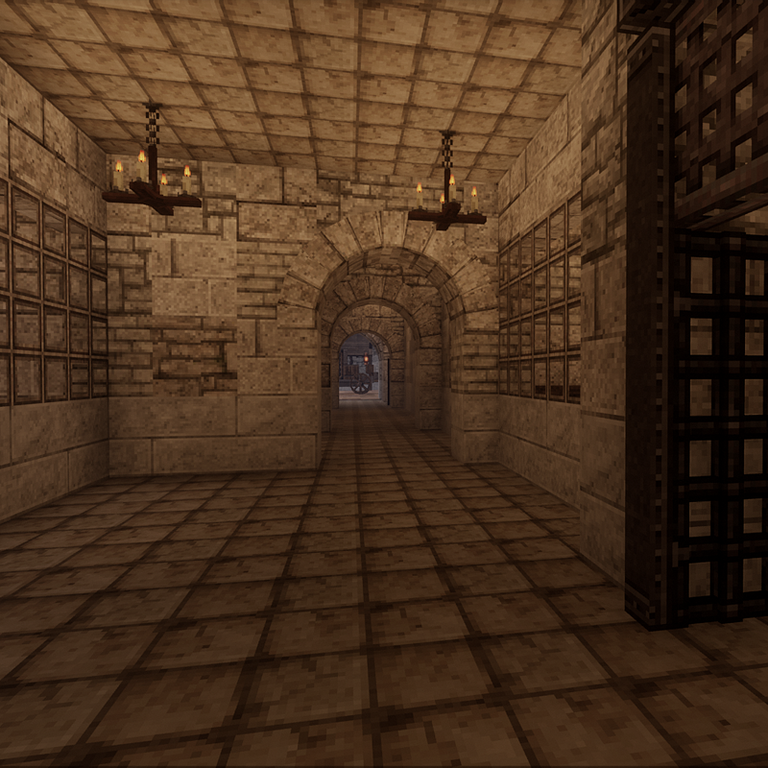
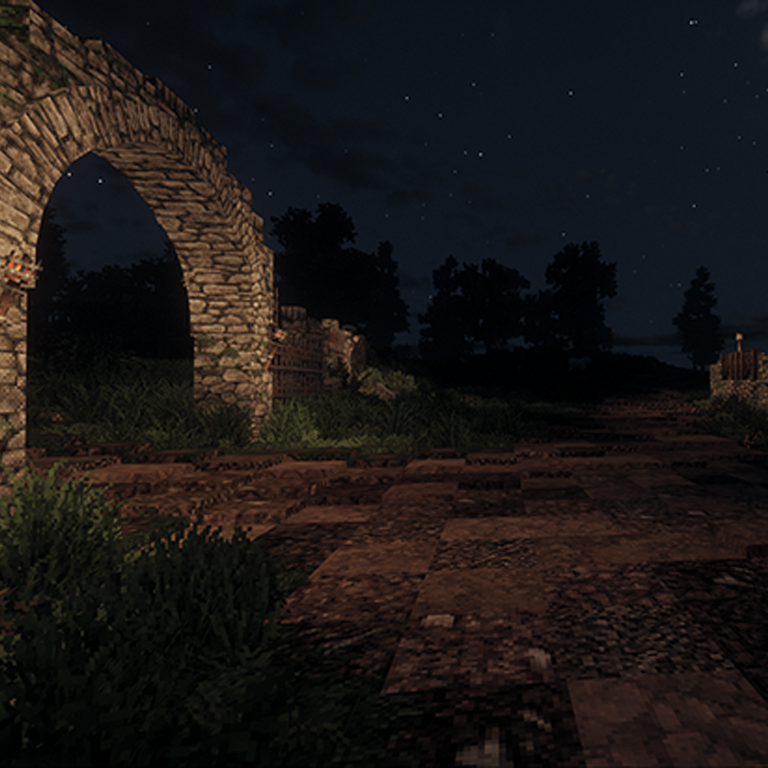
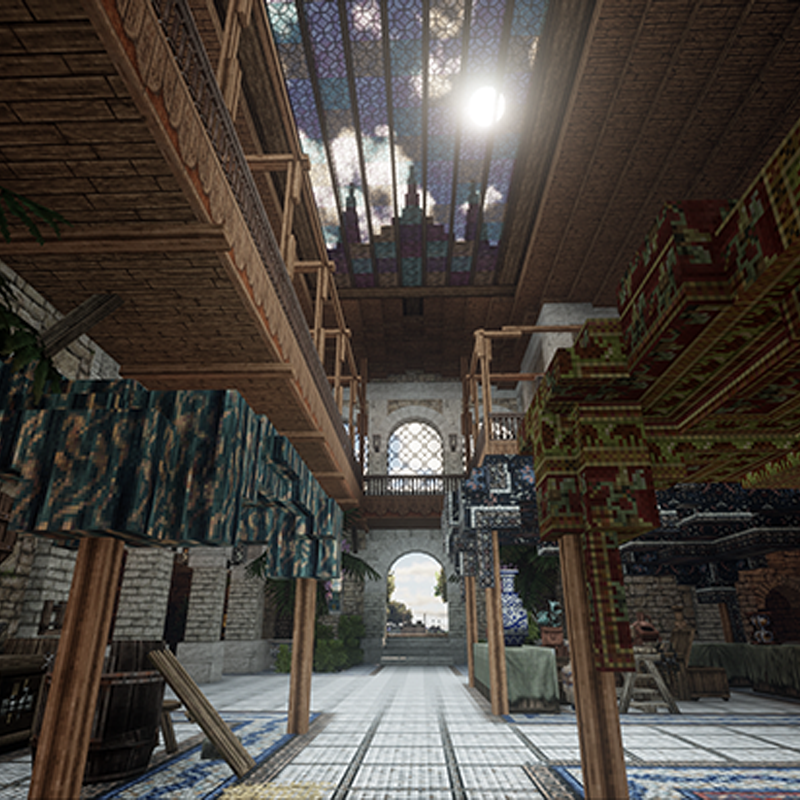
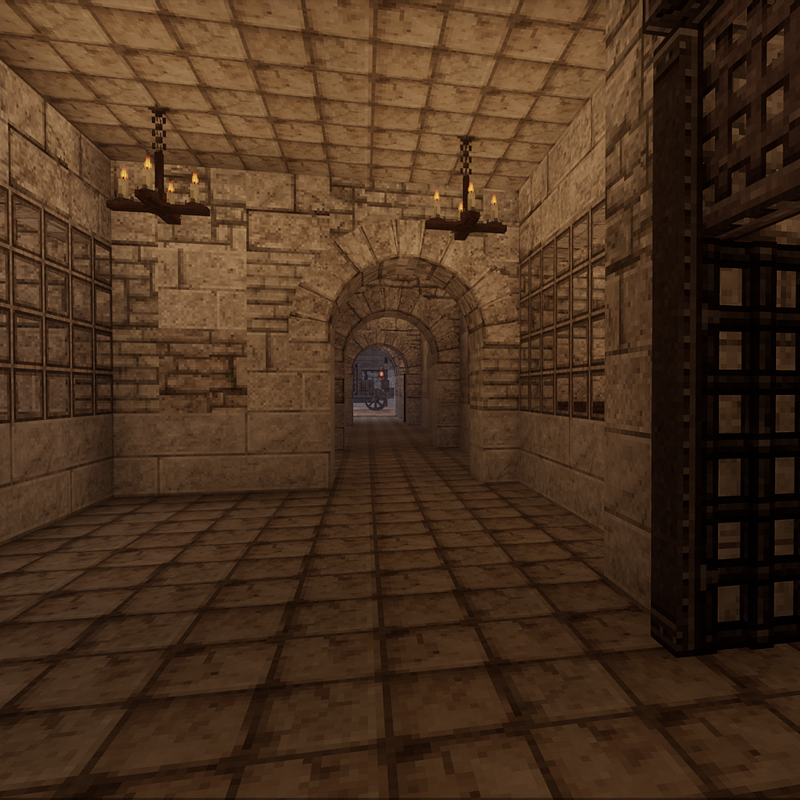
cold stone halls
Inside, the Court was cool. The stone drank sound. The benches creaked like old ships in a new tide. There were more druids here than I had expected, and more farmers, and more men with the set shoulders of jail guards who sleep in shifts. There were also people with ink-stained fingers and eyes that counted words for profession, not patience. Yew’s justice does not live on air alone.
At the front, beneath the emblem of scales carved so deeply into the lintel that I could have set a thumb in the hollow of each pan, sat the judge. Not Talfourd; not Grey; a woman called Judica, short and square and stable as a hearthstone. Her hair, white as a birch trunk, was braided with a simple strip of blue cloth, and there was a mildness in her face that had nothing to do with mercy and everything to do with precision.
When she called my name—how they’d gotten it I couldn’t say, and later someone told me the monks make a habit of catching names as deftly as they catch falling plates—I stood. The room felt like a held breath.
“You are called Rovan of no-fixed-hamlet,” said Judica, voice clear. “You came in from the west track last evening wounded. You carry orc fletching in your tunic. You say you encountered an orc raid near the mill paths. You say you attempted to aid Dren, called Old Dren, farmer and mill-hauler. Is this the sum of the matter as you see it?”
“Yes,” I said. “And no.”
“Begin with the yes,” she said. “Yew favors yes.”
I told it. I told it true. There is a power in telling something true when you know every word could turn and bite you. I told of my bent bow, my poor arrows, my low ambitions. I told of Dren’s cart, the root-gnarled path, the afternoon light slanted like a blade. I told of the orcs: four quick as shadows and one big as a tree stump with a grin like a cracked plate. I told of the arrows, the wheel, the ditch. I told of running. I told of losing the thread where old men’s lives are knotted to the world. I told of waking at the Abbey with mint on my tongue and stone beneath my ribs. I told of wanting wine and choosing weights and measures instead.
When my words were done, the room adjusted itself around them. Judica’s expression did not change at all. “And the no?” she asked.
“The no is that,” I said, “I’m no one, and no one’s word is lighter than air. If Dren is dead, and I think he is, then I ran from death like a coward. And if he lives, then I ran from him like a traitor. I can’t offer you balance. I can only offer you me.”
A low murmur moved like wind along the benches. Judica waited for it to pass, then set a palm upon the wooden rail as if to feel the grain of it. “Justice,” she said, “is not the comfort of equality. It is the discipline of proportion. If the orcs who strike our roads today cannot fear our swords, they must learn to fear our memory. Truth, recorded. Ledgered. Held.” She glanced to her left. “Where are the rangers?”
A man with a scar down his cheek stood. “Deep in the west track and north bend,” he said. “We found the broken cart. We found blood. We found a drag mark—two bodies’ worth—toward the old stones near the mill creek.”
“The old stones,” said a druid near me, and I felt the words settle like a net again. “The forest remembers the law written there.”
“Then the forest may give us back our man,” said Judica. She looked at me. “Rovan of no-fixed-hamlet, will you stand with Yew today? You owed Dren no law but the human one, and you honored it. If there is a balance to left and right of this thing, you can help us find the heavier weight.”
Me. Me, with my bent bow and my bad luck and my runner’s legs. “Yes,” I said, and my voice surprised me: it had iron in it. “I will stand.”
We went in a file out of the Court: rangers, druids, two jailers—Hew and Borin, both broad-backed and solid as water wheels—and myself, a man walking in a borrowed steadiness with an Abbey stick to pace my steps. We passed the Counselors Guild again, and the yard of the tannery, and the bowyer’s long clean face, and the small bank within the Abbey’s reach, and the scent of wine from the Abbey’s cellars drifting like a story about a story. We crossed a little rise where you can see the woods gather close like a hood. The path forked, and the fork after that grew meaner. The trees swallowed sound. Even the birds here seemed to use fewer notes.
The old stones of Yew
At the old stones we found signs the forest had tried to erase and could not. I saw where moss had been scuffed like a beard against a cheek, and the pressed shape of a cart shaft where there was no cart, and a smear on a stone’s edge that needed no name. The druid with the grave face—the same who had lifted me last night—knelt at the largest stone and laid both palms flat upon it. He was quiet long enough that the wind grew bold and toyed with our cloaks. When he rose, his eyes had gone far.
“They went north,” he said, “to the old orc fort beyond the line of the yew groves.”
Someone behind me swore softly.
“The orcs are bold,” said Hew the jailer, “because they think we are soft. We will disprove them.”
The orc fort lay where the Deep Forest drinks its shadow deep and does not give it back. It is not a true fort, not in the human way; it is a nest built of refuse and ambition, thorns and stones and the knowing that fear is a quicker mortar than mud. As we came up on it—quiet, each of us—a stench rose like a slap: old blood, sour meat, sweat that does not know clean water. Borin, who was gentle-faced even with a cudgel in his hand, flared his nostrils and said something about pigs. The ranger with the scar put two fingers to his lips and then pointed. Shapes moved along the ragged parapet—shapes with crude bows and the patience of reptiles.
“Rovan,” the scarred ranger said to me. “You run. Can you run an errand?”
“Does it end with my feet still attached?” I whispered.
“That depends on how quick you learn to share your fear.” He grinned, and it was not unkind. He drew out of his quiver a peculiar arrow with a fat head wrapped in cloth. He splashed a bit of liquid from a skin onto it and lit the cloth with a spark stone. “Run the right side, show your head, let them chase. They think humans are straightforward. Be crooked.”
I took the arrow gingerly. The flame made a thread of smoke that writhed like a little spirit. “And then?”
“And then life,” he said. “Or the other thing. You’ll have company as soon as they see you.”
I did not know then why my legs moved when my heart would have paused. Perhaps it was the Abbey stick warm in my hand. Perhaps it was the image of Judica’s steady mouth pronouncing the word proportion. Perhaps it was the memory of old Dren’s hands—veined and blunt-fingered, work-true—pushing with me against that root. I ran.
The orc lookouts shouted in a language that barks and hisses, and the fort’s wall teemed like a rotten log when you lift it. I shot the fat-headed arrow high and wide to draw their eyes. It landed with a thud on a heap of refuse near a gap in the wall and began to spit flame in a way that promised more than it could deliver. The orcs howled. I saw the big one—the one with a grin like a cracked plate, I knew him now like a bad dream—bellow orders and swing down the ramp with a club big enough to have its own weather. He saw me. He pointed. I became an errand in a world that had suddenly grown very focused on one task.
I ran the right side, then doubled back left, then dove through a shallow gully that stank of wet straw and something dead. Arrows hissed past me. One knuckled the back of my boot heel and scraped sparks from a rock. The fort’s side gate burped a belch of orcs and then a second belch of smaller ones who liked to stab first and think later. I was not brave; I was desperate. Sometimes they wear the same face.
The forest met me with roots and low branches and the kind of blind corners that make men poets or corpses. I do not know if I was either. I do know that the first snare tightened on the big orc’s ankle like a suddenly attentive snake and that his howl was very satisfying. I know the second snare took two of the quick ones by the wrists when they tried to shove past each other, and they fell into the gully with wet sounds and curses. I know that when I vaulted a blowdown log, something heavy thudded behind me and the air shook with the noise of Borin’s cudgel meeting bone. I know that when I cut right past a yew that had lived long enough to see kings come and go, the grave-faced druid stepped from the green like judgment and smacked an orc’s ear with his staff in a way that made me wince for ears everywhere. And I know that when I finally stumbled into the small clearing of the old stones again, lungs burning, the rangers came out of the leaves like the forest’s own hands and put an end to the chase with the economy of people who do not like to waste what life they cannot spare.
After, in the trampled quiet, we heard it: a moan so human it hurt. Beneath a lean-to of branches near the fort’s edge—tucked away like an unwanted thought—lay two men, both bound, both bloodied. One was a stranger to me. The other was Old Dren, pale as flour and twice as dusty, with a bandage of filthy cloth around his middle and a look in his eye that said he had followed the world down to a pinprick and found a reason to stay.
“Late,” he croaked when he saw me, and if the words had weight I would have been crushed. “But not too late.”
-
We carried them home. Yew does not run if it does not have to; it walks with purpose and arrives with both breath and truth. The druids moved ahead, whispering to the trees the way a careful traveler whispers to a skittish horse. The rangers kept pace around us with a geometry that made me feel for once like I understood where lines ought to be. The jailers took the heavy lifting without complaint, great hands gentle on rope and wrist. I walked behind with the Abbey stick, my feet ending a sentence I had started years ago when I chose smallness as a kind of safety. The Deep Forest watched us go and said nothing we could hear.
At Empath Abbey, Melis took Dren’s face in both hands as if it were a book she had been eager to read again. The other man, whose name turned out to be Tam of the Mill Path, went to a straw bed and stared up at the rafters as if they were stars. Dren tried to sit up and was sternly pushed back down. “Later,” said Melis with a voice that brooked no appeals and promised all the continuances that matter. “Later you can give testimony and complain about soup.”
“And wine?” Dren rasped.
“And wine,” she said, “if the Abbey sees fit to bless your stubbornness.”
The Court, when we returned, did not cheer. Yew does not cheer. It acknowledges. It records. It remembers. Judica listened to the short account from the rangers and the longer one from me. She made notes with a quill that looked like it came from a raven who had given it willingly. When she finally spoke, her words were simple.
“Rovan of no-fixed-hamlet,” she said, “you have paid in sweat for the debt of a fear. It is not the balance we would choose for you, but it is the proportion the day set forth. Dren will speak tomorrow if the Abbey permits it. The jailers will follow the matter of the orc band who thought to build within our measure. Yew cannot cage the Deep Forest. But we can remember where it bit us and teach it to bite less often.”
“I don’t know that the forest learns,” I said before I could stop myself.
“The forest learns always,” said one of the druids without turning. “It learns us. The question is whether we learn ourselves.”
Judica inclined her head the smallest degree. “Ledger this day,” she said to the ink-stained clerks. “Name what was lost and what was restored. Note where the rangers laid snares and where the druids spoke with the green. Note that Yew received two men back into its number. Note that our prison remains a place for those who choose to ignore proportion. Note that our Abbey gave what it always gives. Note, too, that a man with nothing but a stick in his hand can sometimes carry a city’s hope as competently as a knight carries a banner.”
That last bit made my ears warm. My instinct was to protest. My habit was to shrink. But the Abbey stick was still warm in my palm, and my shoulders had learned a new shape, and the bread I had eaten outside the Court earlier sat in my belly like a pact. So I only bowed.
After, in the Court’s cool shade, the scarred ranger clapped me on the shoulder with a weight that would have flattened me yesterday. “Come to the bowyer,” he said. “Your arrows make a noise like a bag of old bones. A Great Oak shaft will stand straighter for you, now that you walk straighter for yourself.”
We went. The bowyer eyed me as if measuring me for a sort of wooden truth. He chose six shafts from a rack with as much tenderness as a mother choosing fruit at market. “These will fly where you intend,” he said. “If your intention holds.”
We cut across the Abbey’s lower court after, and the smell of wine was a living thing. The cellarer at Ye Olde Winery stood in his stone doorway as if he’d been growing there since the Abbey’s cornerstone. He considered our faces, read the story as simply as a monk reads a psalm, and fetched two small cups of something that tasted of berry shadow and leaf light and a sweetness that kept faith with the tongue long after it was gone.
“To proportion,” said the ranger, raising his little cup.
“To proportion,” I said, and we drank.
Evening came like a tired soldier pulling off boots by the fire. I walked alone awhile down the road that leads past the monastic gardens, where herbs stand in neat squares the way soldiers stand on parade grounds, except these soldiers smell of rosemary and thyme and clean earth. Past the gardens, past a small rise where the ground remembers rain, there is a fork where a narrow track slips deeper into the woods. If you follow it long enough, you’ll come to a moongate—Yew’s own, tucked like a secret in a pocket of the Deep Forest. Past that gate lies Heartwood, the elf city that sits like a thought in a branch: high, green, private. I did not pass the gate that night; I only went far enough to see the first drift of its blue shimmer between trunks and feel the hair on my arms lift at the old wonder of it. A thing like that reminds a man that the world is wider than his mistakes.
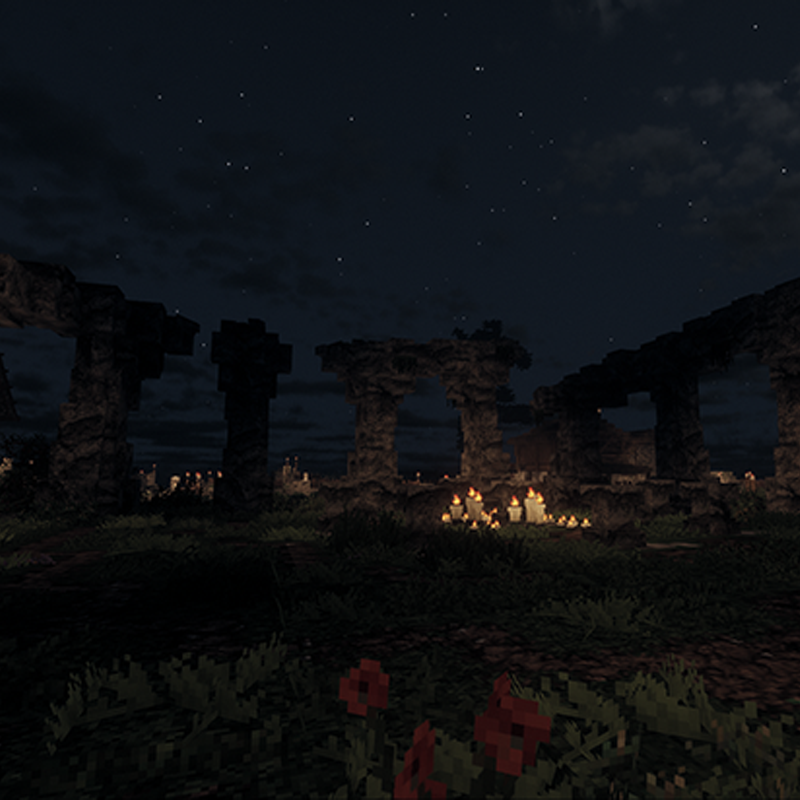
On my way back I passed the graveyard near the Abbey, quiet as a book you mean to read tomorrow. I paused by the stones, though no stone there bore a name I knew. There is a comfort to a graveyard in Yew. The markers do not shout; they mark. They say, in their way: this life weighed something, and we keep its record. They say: Justice is not a sword alone; it is a ledger, and all good ledgers are kept in careful hand.
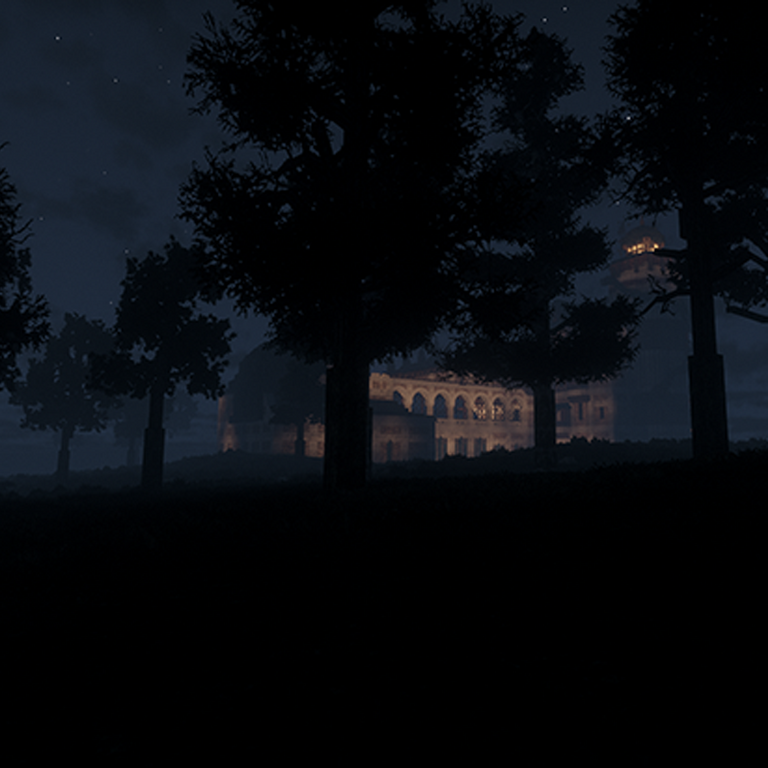
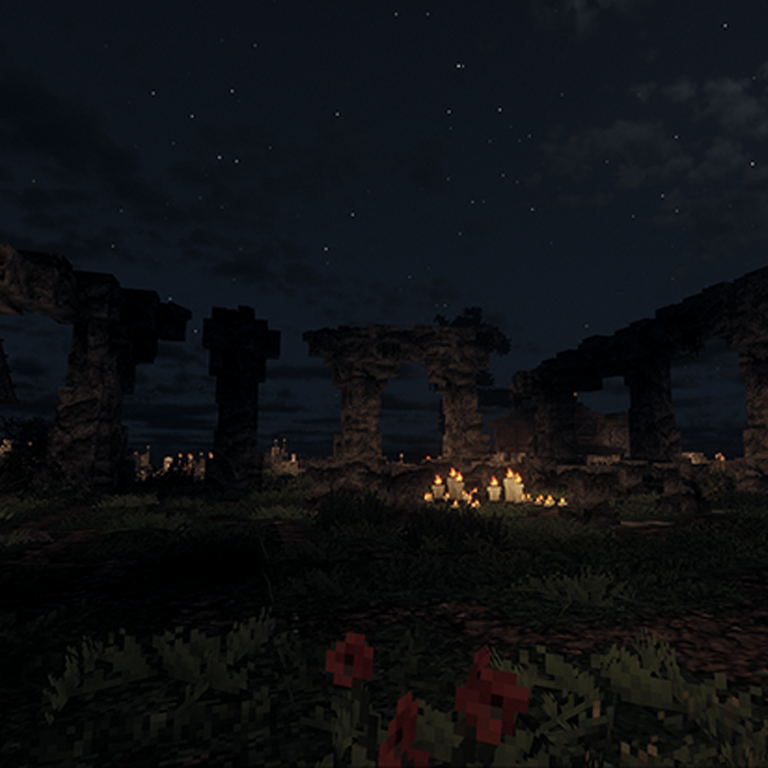
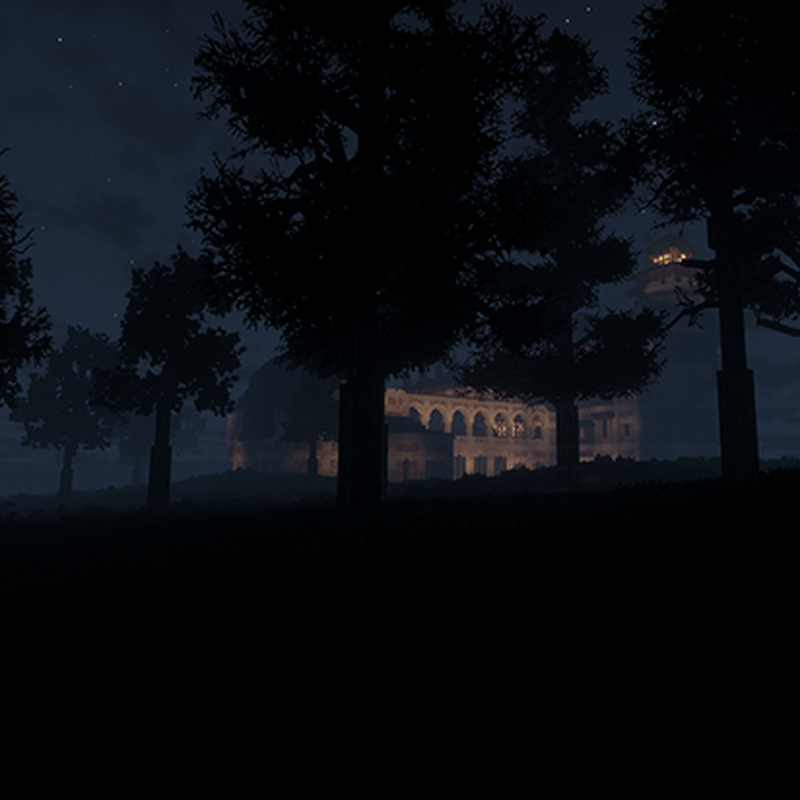
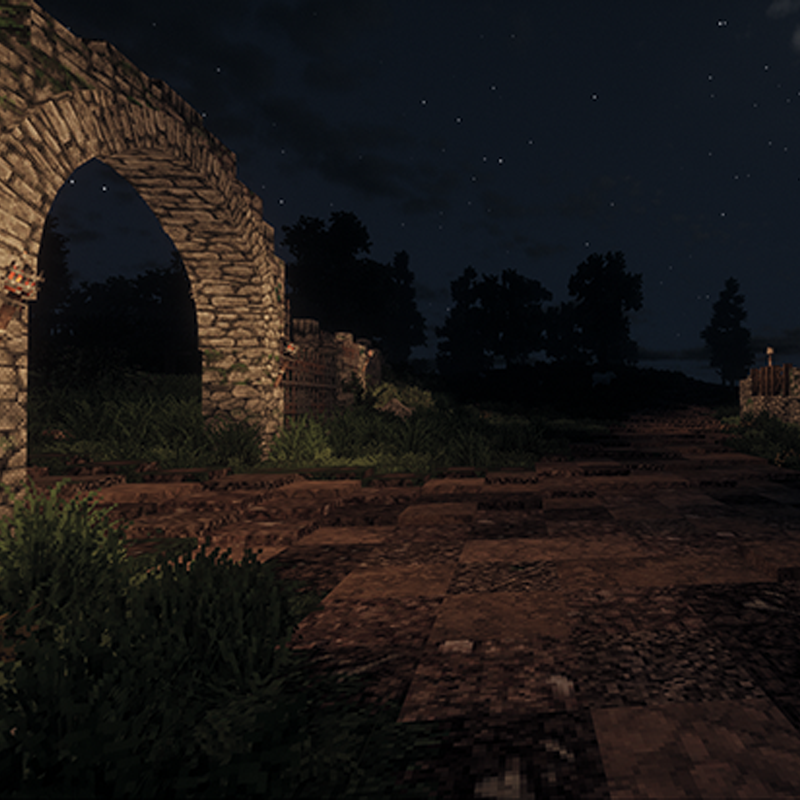
City light yields to the dark forest
Near the graveyard a path veers toward the Court again. I took it without quite meaning to. The Court’s lamps were lit, shedding small pools of honey-colored light onto the steps. A woman in a butcher’s apron sat on the second step, forearms powdered with flour instead of blood. Beside her stood a man with a bow whose fletchings I would have recognized from the Great Oak by touch alone. They were talking softly about prices, about wolves, about whether a certain cart axled near the mill should be replaced this season or next. Yew concerns. Yew balances.
“Rovan,” said a voice behind me, and I turned to find Judica herself stepping out into the lamplight. Up close, the lines at the corners of her mouth looked like they had been honed on the edges of very sharp truths. “I have a question for you.”
“I have as many answers as I can afford,” I said.
She smiled—quick, not unkind. “Do you have a place to lay your head tonight?”
I started to say no. The word caught in my throat like a fishbone. The world had changed its angles around me, and I had not yet caught up. “I have an Abbey stick,” I said instead, which is no kind of answer at all.
“The stick will not keep your back from the ground,” she said. “Speak to the monks. They have room. Or,” and here her eyes flicked toward the Deep Forest with a careful acknowledgement, “speak to the druids. They always know where a body can lie down and let the green hold it a while.”
“Thank you,” I said. “For seeing me. For letting me stand on your floor as if I belonged.”
“You did not belong,” she said. “Not this morning. But belonging is not given; it is made. Yew is not a walled city. It is a held breath. People come into it and fill the lungs or steal the air. Today you breathed with us. Try to keep the measure.”
After she left, I sat a while on the Court steps and watched the small acts that keep a city upright. A jailer unlocking a door to let a weary guard out and another in. A druid taking a cutting from a hedge as if it were an oath. A baker setting a loaf on a windowsill to cool, and a hand reaching up to steady the sill because flour makes the world slippery and no one wants a loaf to fall. The lamps burned low and I felt the marrow of me settle. I went at last to the Abbey and found a pallet and a blanket and the sleep that comes when a man’s body and the day’s weight make a pact.
I woke at dawn to bells and bees. Melis met me in the corridor and nodded toward the ward. “He’s awake,” she said.
Dren lay propped on an elbow, his hair wild as cut straw. When he saw me, he made a sound that could have been a laugh or a curse. “Runner,” he said, “you owe me a wheel.”
“I owe you a world,” I said, and to my surprise he waved that off like a fly.
“Worlds are for kings. Wheels are for farmers. Bring me a good one from the mill. Pay the bowyer fair for the axle pin. Then come back and help me plant winter seed. That’s the weight of it.”
I swallowed. “I will.”
“And bring your Abbey stick,” he added, a smile cutting a furrow through his beard. “A man walks truer with something to lean on. Even if it’s only to remind him he doesn’t need it as much as he thinks.”
Later that day I stood again in the Court of Truth as Dren gave his testimony with a farmer’s economy: a string of facts pulled like onions from the dirt, knocked against a thigh to lose the mess, set in a basket fit to carry. The rangers spoke; the clerks scratched; the jailers shifted their boots in the way men do when they are eager to be about the next part that involves their hands. Judica wrote a word at the top of the page that I could not quite see and then looked up at us all as if we were students and she, for once, could afford a smile.
“Let it be recorded,” she said, “that on this day a small life made a large difference. Let it be known that the Deep Forest is not an excuse for losing our way. Let it be said, in Yew and beyond, that Justice remains not a spectacle but a practice. We will carry our practice forward.”
I walked out into the light with the city moving around me like a living diagram: bakers breaking the first loaves, monks ladling out bowls, a bowyer lifting his day’s shutters, a jail door yawning to the morning and shutting careful again, and the wind combing the yews on the edge of town so that they whispered and then stilled. Somewhere down the northern track the moongate shimmered and the elves went about their tall business. Somewhere up the western track a fort of sticks and stones remembered what it feels like to be empty. Somewhere in the Abbey, wine grew a day older in its cask and softened the edge of a truth without blunting it.
A new day in Yew
As for me, I bought a wheel. I walked it with both hands, laughing like a fool at the way it insisted on turning even when the ground tried to lie. I paid the bowyer fair coin for the pin, and he handed me the receipt like a benediction: a clean cut of wood, a clean weight of silver. Then I went to Dren’s holding and set the wheel on its axle and listened to him tell me where he kept his seed and how he marked his rows and why it mattered to know the feel of the soil with the heel of your palm as well as the tips of your fingers. I stayed. I will not pretend it was noble. It was proportionate.
Some nights, after the work and before the sleep, I walk to the rise where you can see the Abbey and the Court and the long, slow pulse of Yew moving along its roads. If you have ever watched a man breathe after a fever breaks, you know the deep calm of that motion. You know what it is to watch a chest lift and fall as if it has discovered a new kind of truth. That is Yew at dusk. That is a city standing without walls because its people hold each other up.
I am still no one, and that is the gift. No one can move through a city like water through the root system of a tree, carrying what the trunk needs to the farthest leaves. No one can listen without being listened for. No one can lift quietly and let the world believe it lifted itself. The undergrowth rises, and in rising, holds.
If you come to Yew—across the Deep Forest’s measured welcome, past the Abbey’s cool stone and the winery’s patient casks, under the balanced gaze of the Court—bring your smallest self. The city will teach it to weigh something. And if you meet a man with an Abbey stick and a bow quiver that no longer rattles like bones, stop and share a loaf. Ask after Dren’s winter seed. I will answer you. I will put a hand on the wheel. Together we will make the ground remember our weight.
For here, in the City of Justice, the ledger is never closed—and the balance, at last, belongs to all of us.